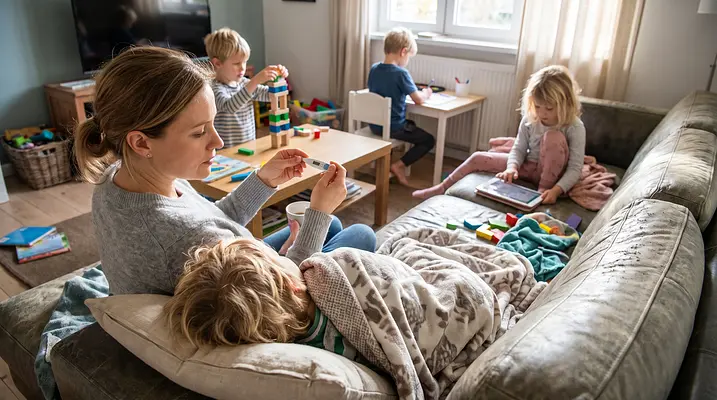
When one child comes down with something, the whole house shifts. Suddenly you are a nurse, a snack chef, a referee, and an entertainer all at once, and the healthy siblings still need breakfast, attention, and something to do. If you have ever felt pulled in four directions while balancing a thermometer in one hand and a sippy cup in the other, you are in very good company.
The good news is that sick days with siblings do not have to mean chaos. Kids are surprisingly adaptable when they know what to expect, and even young children can rise to the occasion when they are given a small role and a clear rhythm to the day. The goal is not a perfectly quiet house or a spotless living room - it is a day where the sick child rests, the healthy kids feel seen, and you make it to bedtime with a little energy left.
This post walks through practical ways to keep the rest of the crew busy and content while you focus on your patient: simple activity stations, a rotation that spreads your attention around, gentle jobs for sibling helpers, routines that keep germs from making the rounds, and a plan for tag-teaming with a partner. And because no sick day goes exactly to plan, we will end with a reminder to go easy on yourself about screens, snacks, and the state of the playroom.
🧺 Set Up Independent Activity Stations
Healthy siblings do best when they can keep themselves busy without needing you every five minutes. A few simple stations set up in the morning can buy you long stretches of calm while you tend to your sick child. Think low-mess, high-absorption activities that kids can start and restart on their own.
- Fill a few trays or bins with self-contained activities like puzzles, sticker books, magnetic tiles, or coloring pages.
- Rotate a "special box" of toys that only comes out on sick days so it feels novel and exciting.
- Set up an audiobook or podcast corner with headphones, a beanbag, and a stack of picture books.
- Place each station in a different spot so siblings spread out instead of piling on top of each other.
⏰ Rotate Your Attention on Purpose
When your focus is on the sick child, healthy siblings often act out simply because they miss you. Short, predictable bursts of one-on-one attention work far better than trying to be everywhere at once. Even ten focused minutes can refill a child's cup for an hour.
- Set a timer and give each healthy child a short block of your full attention between check-ins on your patient.
- Tell siblings exactly when their turn is coming so they can wait without whining.
- Use the sick child's nap or quiet rest time for a quick game or snuggle with the others.
- Keep a visual schedule on the fridge so kids can see the rhythm of the day at a glance.
🦸 Recruit Sibling Helpers
Kids who feel useful complain less and connect more. Giving healthy siblings small, age-appropriate jobs turns them from bystanders into part of the care team, and it often softens the jealousy that can bubble up when one child is getting extra attention.
- Ask a sibling to deliver a fresh water bottle, a favorite stuffed animal, or a cool washcloth to the door of the sick room.
- Invite older kids to draw get-well cards or record a silly video message for their sibling.
- Assign simple household jobs like feeding the pet or setting the table so the day keeps moving.
- Thank helpers specifically and out loud so they know their contribution mattered.
🧼 Keep Germs Contained With Simple Routines
You cannot bubble-wrap the house, but a few consistent habits can help keep the rest of the family healthier while one child recovers. The key is making these routines automatic and blame-free so nobody feels punished for being sick.
- Give the sick child a home base, such as their bedroom or one corner of the couch, with their own blanket and pillow.
- Assign the sick child their own cup, towel, and utensils for the duration.
- Build hand-washing into natural transition points like before meals and after visiting the sick room.
- Wipe down high-touch spots like doorknobs, light switches, and the bathroom faucet once or twice a day.
🤝 Tag-Team With Your Partner or Backup
If you have a partner, a grandparent, or a friend nearby, a sick day is the time to divide and conquer rather than both hovering over the same thermometer. A quick morning huddle prevents the classic trap where one person does all the nursing and the other does not know what has been given or when.
- Split roles clearly, with one person on nurse duty and the other on sibling duty, and swap halfway through the day.
- Share updates in one place so both of you know what has been logged, observed, and asked.
- Trade off nights if the illness stretches on so nobody runs on empty for days.
- Agree in advance who will contact the pediatrician with questions so nothing falls through the cracks.
💛 Be Kind to Yourself About Screens and Mess
Here is the truth every seasoned parent knows: sick days run on different rules. Extra screen time, cereal for dinner, and a living room that looks like a toy store exploded are not failures - they are evidence that you prioritized what mattered.
- Let go of the regular screen-time rules for the day and drop the guilt along with them.
- Choose "good enough" meals without apology, because fed is what counts today.
- Leave the mess until the end of the day, then do one ten-minute family tidy-up together.
- Take five minutes for yourself when you can, even if it is just coffee behind a closed pantry door.
✅ Quick Action Plan
- Set up two or three independent activity stations before the day gets rolling.
- Post a simple schedule so every child knows when their turn for your attention comes.
- Give each healthy sibling one small helper job for the day.
- Establish a sick-day home base with dedicated cups, towels, and comfort items.
- Hold a two-minute huddle with your partner or backup to split roles.
- Pick one rule to relax today, guilt-free, whether it is screens, snacks, or mess.
This post is for educational purposes only and is not medical advice. Always consult your pediatrician or a qualified healthcare professional with any questions about your child's health, symptoms, medications, or treatment, and seek urgent care right away for any emergency or warning signs.
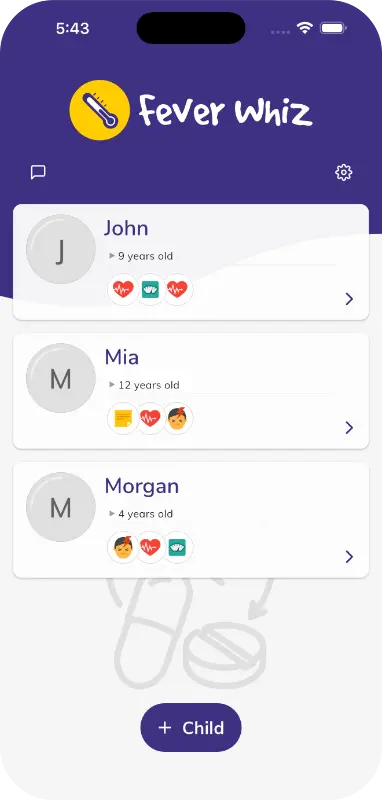
When you are juggling a full house, keeping track of who gave what and when can be the hardest part of the day. Fever Whiz is a free app that lets you log medications, temperatures, and symptoms, set reminders, visualize trends, store medical documents, and share a real-time care timeline with everyone helping care for your child. It is a simple way for the whole care team to stay on the same page, so you can spend less time remembering and more time comforting.