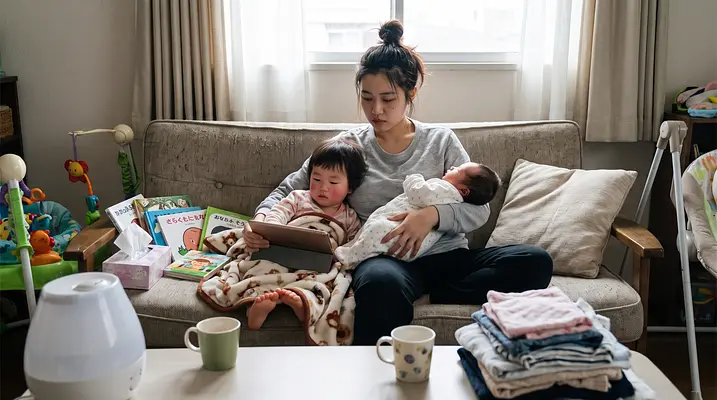
There is a special kind of chaos that arrives when your older child comes down with something and there is a brand-new baby in the house. You are already running on broken sleep, the laundry is somewhere between "behind" and "lost cause," and now a warm-cheeked preschooler needs you too. It is a lot, and it is okay to admit that it is a lot.
The good news is that a few simple routines can help you care for your sick kid, protect the baby's rhythm, and keep the whole household from tipping into overwhelm. None of this requires perfection. It requires a rough plan, a little teamwork, and a willingness to let the non-essential stuff slide for a few days.
One important note before anything else: any question about your newborn's exposure to illness belongs with your pediatrician, not with guesswork or late-night searching. This post is about the practical, household side of sick days - the organizing, the comforting, and the coordinating - so you have more calm to work with while the professionals handle the medical questions.
🏠 Zone the House, Gently
You do not need hospital-grade protocols, just a loose map of who rests where. A simple layout keeps the sick kiddo comfortable while giving the baby a little distance, and it makes the day feel less like a scramble.
- Set up a cozy "sick day headquarters" for your older child with blankets, water, tissues, and quiet entertainment in one room.
- Keep the baby's feeding and sleeping spots in a different area of the home when your space allows it.
- Give the sick child their own cup, towel, and blanket so shared items are not floating between rooms.
- Stash a small caddy of wipes, tissues, and hand sanitizer in each zone so supplies are always within reach.
- Ask your pediatrician what level of separation makes sense for your family rather than guessing at what is enough.
🧼 Make Hand Hygiene a Family Routine, Not a Lecture
Little kids do not respond well to being policed, but they love rituals. If handwashing becomes "the thing our family does" rather than a rule aimed at the sick kid, you will get far more cooperation with far less friction.
- Sing the same short song at the sink every time so washing has a fun, predictable rhythm.
- Wash your own hands visibly and often, because kids copy what they see more than what they hear.
- Place a step stool and easy-pump soap where your older child can reach them without help.
- Build washing into transitions, like before snacks and after cuddles, so it happens automatically.
- Praise the habit warmly instead of framing it as "because you are germy," which can sting a sensitive kid.
🤝 Give Each Child an Anchor Adult
When two children need care at once, the biggest gift you can give yourself is a clear division of labor. If a partner, grandparent, or friend is available, deciding who anchors which child - even loosely - prevents the exhausting dance of both adults hovering over both kids.
- Assign one adult as the sick child's main comfort person for the day, and the other as the baby's.
- Swap anchor roles when you can so neither adult burns out and each child stays connected to both of you.
- Hand off deliberately with a quick update, like "she napped an hour and drank half her water," instead of assuming the other person knows.
- Ask a helper to take over a specific task, such as dinner or baby-holding, rather than a vague "help out."
- Keep solo-parent days simpler by alternating focused time with each child and letting screens or quiet bins fill the gaps guilt-free.
💛 Keep the Older Child from Feeling Pushed Aside
A sick kid with a new sibling is carrying two hard things at once: feeling crummy and sharing you. A few intentional moments of connection go a long way toward preventing the "nobody cares about me" spiral that makes sick days harder for everyone.
- Carve out short one-on-one moments with your older child, even ten minutes of stories or snuggles.
- Narrate their importance out loud, like "the baby is lucky to have such a brave big sibling."
- Let them make small choices - which pajamas, which show, which soup - so they feel some control.
- Avoid blaming language about germs and the baby, and frame precautions as "keeping everyone comfy."
- Save a special sick-day-only activity, like a sticker book or audiobook, that makes resting feel a little privileged.
📝 Track Observations Before Sleep Deprivation Erases Them
Newborn-stage memory is unreliable in the best of times, and a sick older child adds a whole second stream of details. Writing things down as they happen means you are not reconstructing the day from fog when the pediatrician asks.
- Note temperatures, symptoms, naps, meals, and mood changes at the moment you notice them.
- Record the time alongside each note, because "sometime this afternoon" is hard to work with later.
- Keep the log where every caregiver can see and add to it, so handoffs do not lose information.
- Jot down questions for the pediatrician as they occur to you instead of trusting your 3 a.m. brain to remember.
- Include little context notes, like "clingy after lunch" or "ate a full bowl," since small details help paint the picture.
🩺 Bring Every Exposure Question to Your Pediatrician
It is tempting to crowdsource answers about newborns and germs from forums and group chats, but your baby's situation is specific, and your pediatrician knows it best. Treat them as your first call, not your last resort.
- Call the pediatrician's office with your exposure questions rather than relying on internet guesses.
- Ask what signs in the baby or the older child would warrant a call back or a visit.
- Share your written log during calls or appointments so your answers are accurate, not approximate.
- Seek urgent care right away for anything that feels like an emergency, and trust your instincts.
✅ Quick Action Plan
- Set up a cozy sick-day zone for your older child, separate from the baby's main spaces.
- Turn handwashing into a fun family ritual with a song and easy-reach supplies.
- Agree with your partner or helper on who anchors which child today.
- Schedule one short, undivided one-on-one moment with your older child.
- Start a simple log of temperatures, symptoms, naps, and questions as they happen.
- Call your pediatrician with any question about the baby's exposure - never guess.
This post is for educational purposes only and is not medical advice. Always consult your pediatrician or a qualified healthcare professional with any questions about your children's health, symptoms, medications, or care.
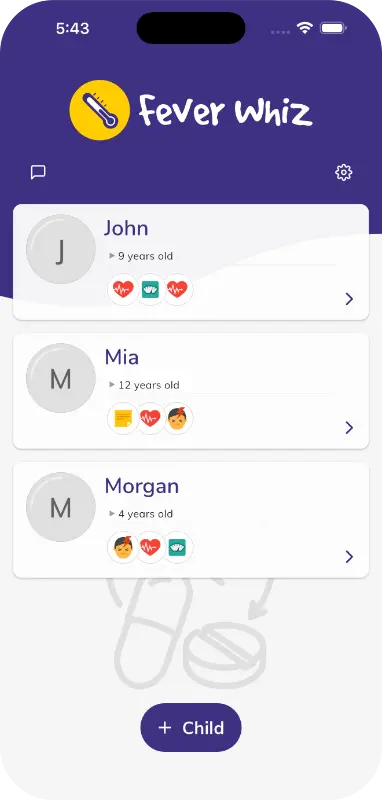
When your hands are full with two little ones, your memory should not have to carry the sick-day details too. Fever Whiz lets you log medications, temperatures, and symptoms in seconds, set reminders, and share a real-time care timeline with your partner and helpers so everyone stays on the same page. It is a free, gentle way to stay organized on the days when organized feels impossible.