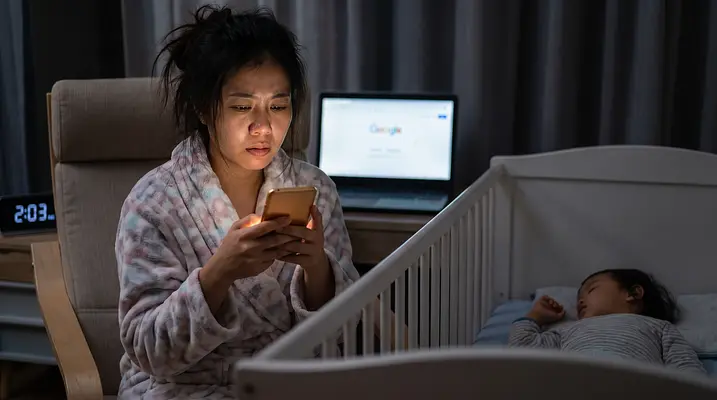
It is 2 a.m. and you are sitting in the dim glow of your phone, one hand resting on your sleeping child, the other scrolling through search results that keep getting scarier. What started as a quick question has somehow turned into forty-five minutes of worst-case scenarios, and you feel more anxious than when you started. Almost every parent has been there.
The late-night search spiral is one of the most universal experiences of modern parenting. It comes from a good place - you love your child fiercely and you want answers right now. But the internet at 2 a.m. is not built to reassure you. It is built to keep you scrolling, and an anxious brain in a dark room is remarkably good at finding the scariest possible interpretation of every headline.
This post is not about ignoring your instincts. Your instincts matter, and when something feels truly wrong, reaching out to a medical professional is always the right move. This is about the in-between nights: the ones where worry is loud, sleep is short, and you need practical ways to steady yourself so you can care for your child with a clear head.
🌀 Why the Spiral Happens
Understanding the spiral is the first step to stepping out of it. Late at night, your reasoning brain is exhausted while your alarm system is wide awake, and search engines happily serve up dramatic answers to vague, frightened questions. It is a perfect storm, and it is not a personal failing.
- Recognize that fatigue amplifies anxiety, so 2 a.m. worries always feel bigger than they will at 9 a.m.
- Remember that search results are ranked for clicks, not for how likely something is to apply to your child.
- Notice that vague symptom searches invite the internet to answer a question you did not actually ask.
- Accept that seeking certainty online usually produces more questions, not fewer.
- Name the spiral out loud when you catch it, because labeling the pattern loosens its grip.
🧘 Ground Yourself First
Before you make any decision at 2 a.m., spend two minutes calming your body. A regulated nervous system thinks more clearly, observes more accurately, and makes better choices than a panicked one. This is not indulgent - it is part of caring for your child well.
- Put the phone face-down and take five slow breaths, making the exhale longer than the inhale.
- Plant your feet on the floor and name five things you can see, hear, or feel in the room.
- Drink a glass of water and stretch for a moment before returning to your child's side.
- Remind yourself of what is concretely true right now, rather than what might happen.
- Sit with your child for a quiet minute and simply watch them, instead of watching your screen.
📓 Write Down What You See Instead of Searching
Here is a powerful swap: every time your thumb reaches for the search bar, reach for a note instead. Recording what you actually observe turns anxious energy into useful information, and it gives you something concrete to share with a professional rather than a blur of half-remembered details.
- Jot down the time, your child's temperature if you have taken it, and anything you notice about how they seem.
- Log each medication you give, with the time, so you are not reconstructing it from memory later.
- Note what your child is doing, such as sleeping, drinking, or fussing, in plain descriptive words.
- Record when symptoms started and whether anything seems to have changed.
- Keep your notes in one place, whether that is a notebook on the nightstand or an app on your phone.
📝 Prepare Questions for the Pediatrician
Worry becomes far more manageable when it has somewhere to go. Turning each anxious thought into a written question converts a spiral into an agenda, and it means your next conversation with the pediatrician will be focused and productive instead of foggy.
- Keep a running list where every "what if" gets rewritten as a question to ask.
- Note exactly what you would want a professional to look at or explain.
- Write down anything unusual you observed, with times, so you can describe it precisely.
- List the medications and doses you have given so the office has an accurate picture.
- Bring the list, or your log, to the visit or call so nothing gets forgotten in the moment.
📞 Call a Human, Not the Search Bar
When you genuinely need answers at night, a qualified human beats the internet every single time. Nurse advice lines and pediatric after-hours services exist precisely for worried parents at 2 a.m., and no reasonable professional will ever fault you for calling.
- Save your pediatrician's after-hours number and your nurse advice line in your phone before you ever need them.
- Call the professionals whenever your gut says something is wrong, without waiting for morning to feel justified.
- Read your written observations aloud when you call, so the conversation starts with facts.
- Follow the guidance you are given rather than re-checking it against search results afterward.
- Seek emergency care immediately any time you believe your child needs urgent help.
😴 Give Yourself Permission to Rest
Once you have observed, noted, and made your plan, the bravest thing you can do is put the phone down and rest. Sleep is not neglect - it is how you recharge the patience and judgment your child will need from you tomorrow.
- Set a specific check-in plan, such as looking in on your child at an agreed time, so your brain can stand down between checks.
- Charge your phone across the room once your plan is made, out of thumb's reach.
- Trade shifts with a partner when you can, so each of you gets a real block of sleep.
- Replace scrolling with something calming, like slow breathing or a boring podcast, to help you drift off.
- Remind yourself that a rested parent is one of the best things a sick child can wake up to.
✅ Quick Action Plan
- Save the pediatrician's after-hours and nurse line numbers in your phone tonight.
- Put a notebook or note app within reach for logging what you observe.
- Practice one grounding technique now so it is familiar when worry hits.
- Turn every anxious "what if" into a written question for the pediatrician.
- Make a check-in plan with your partner or yourself, then let yourself rest.
This post is for educational purposes only and is not medical advice. Always consult your pediatrician or a qualified healthcare professional with any questions about your child's health, symptoms, medications, or treatment, and seek urgent care right away for any emergency or warning signs.
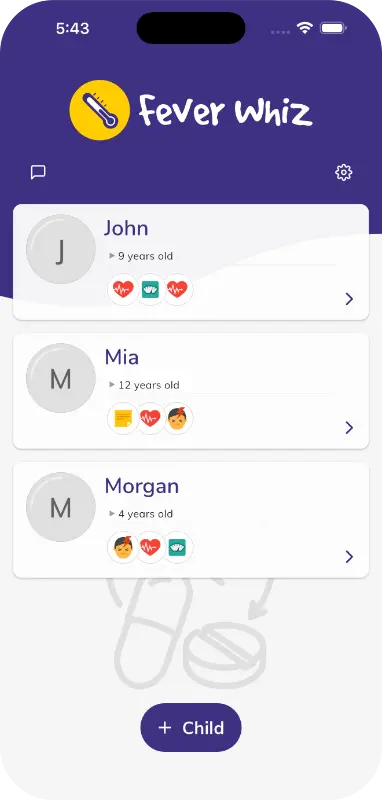
If you would like one calm place for all those middle-of-the-night notes, Fever Whiz can help. This free app lets you log temperatures, medications, and symptoms as they happen, set reminders, see trends on simple charts, store medical documents, and share a real-time timeline with everyone caring for your child. When morning comes, you will have a clear record to share with your pediatrician instead of a blur of worried memories.