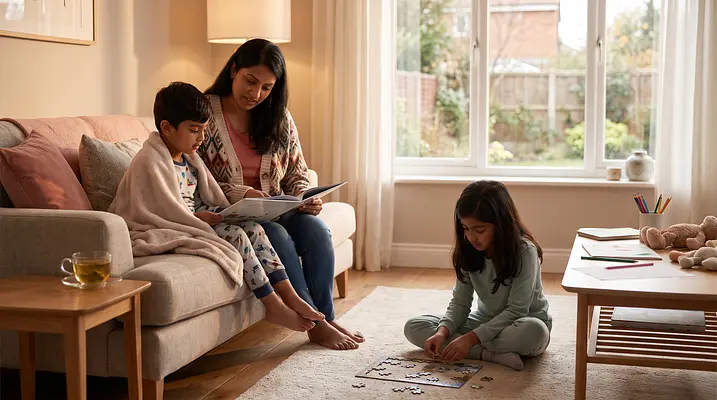
Every parent knows this stretch of a sick spell: the worst seems to be over, your child is bored instead of miserable, and yet they are clearly not back to their usual whirlwind self. These are the in-between days - too well for the couch to feel necessary, too tired for a normal day to feel possible. It is a strange limbo for kids and caregivers alike.
The temptation on both sides is to rush. Your child wants to run, you want your routine back, and the calendar has opinions of its own. But recovery tends to move at its own pace, and the gentlest path through these days is usually a soft middle ground: quiet activities, built-in rest, and a gradual drift back toward normal.
This post is a collection of ideas for exactly that - keeping an almost-better kid content without wearing them out, and keeping yourself sane in the process. And when it comes to the big question of when your child is ready to return to school or daycare, that call belongs to your school's policy and your pediatrician, not to a blog post.
🧩 Stock a Menu of Low-Energy Activities
The in-between days call for activities that occupy the mind while the body keeps resting. Having a small menu ready means you are not inventing entertainment on the spot every twenty minutes.
- Set out puzzles, coloring books, or sticker pads on a tray they can use from the couch.
- Queue up audiobooks or calm podcasts so their imagination gets exercise while their body does not.
- Build a simple couch picnic with a blanket, easy snacks, and lunch served "restaurant style."
- Offer quiet building toys, like blocks or magnetic tiles, on a bed tray or the floor beside you.
- Rotate activities every hour or so, since almost-better kids get bored faster than sick kids do.
- Save one novel item, like a new library book or a small craft kit, for the inevitable afternoon slump.
⏸️ Pace the Day with Rest Blocks
An almost-recovered child will often sprint through the morning and crash hard by lunch. Building rest into the schedule on purpose beats negotiating it after a meltdown.
- Alternate every stretch of activity with a planned quiet block of books, audio, or lying down.
- Keep a loose rhythm of activity, rest, snack, and repeat instead of an open-ended free-for-all.
- Frame rest as part of the day, like "this is our listening hour," rather than a punishment for being sick.
- Protect nap time or quiet time even if your child claims they are completely fine.
- Watch for early tired signals, like whining or flopping, and start the rest block before the crash.
🌤️ Ease Back Toward Routine, One Piece at a Time
Routine is comforting, but jumping from pajama days straight back to a full schedule can be jarring. Reintroducing normal life in small pieces gives your child's energy a chance to catch up with their enthusiasm.
- Restore anchor points first, like regular wake-up, meals, and bedtime, before anything else.
- Add one ordinary element per day, such as getting dressed, tidying toys, or a short walk outside.
- Keep outings brief and low-key at first, and head home before the energy runs out.
- Hold off on high-energy plans, playdates, and activities until your child is consistently back to baseline.
- Let your pediatrician and your school's policy guide the timing of the return to school or daycare.
📈 Watch Energy Levels and Write Them Down
Energy is one of the clearest windows into how recovery is going, and it is also the easiest thing to misremember. A few quick notes each day give you a real picture instead of a vague impression, and they make any conversation with your pediatrician much more useful.
- Note how long your child stays active before needing to flop down and rest.
- Record appetite, mood, sleep, and any lingering symptoms alongside energy each day.
- Jot the time of day with each observation, since mornings and afternoons often look different.
- Share these notes with your pediatrician if you have questions about how recovery is going.
- Bring the same notes to any conversation about returning to school, so the decision is based on facts rather than fuzzy memory.
🧘 Resist the Urge to Rush Back to Normal
This one is mostly for you. After days of clingy, cooped-up caregiving, the pull to declare everything fine is powerful. But a slightly slower return is usually gentler on everyone than a bounce-back that boomerangs.
- Expect a few uneven days where energy surges and dips without much warning.
- Say no, kindly, to obligations that can wait another day or two.
- Lower the bar for chores, screens, and meals a little longer without guilt.
- Take your own breaks during rest blocks, because caregiver recovery is real too.
- Check in with your pediatrician about anything that seems off or is not improving, rather than pushing through on hope.
✅ Quick Action Plan
- Set up a tray of couch-friendly activities like puzzles, coloring, and audiobooks.
- Sketch a loose rhythm for today that alternates activity blocks with rest blocks.
- Pick one piece of normal routine to reintroduce, and keep the rest of the day soft.
- Jot down today's energy, appetite, mood, and any lingering symptoms with times.
- Plan one small treat activity for the afternoon slump before it arrives.
- Ask your pediatrician and check school policy before deciding on the return date.
This post is for educational purposes only and is not medical advice. Always consult your pediatrician or a qualified healthcare professional with any questions about your child's health, recovery, symptoms, or readiness to return to school or activities.
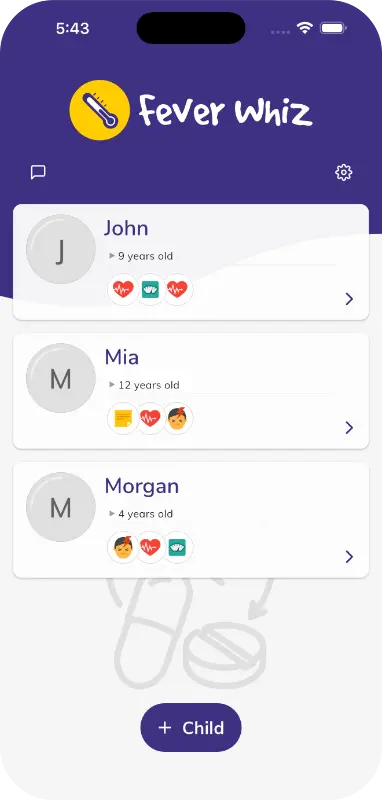
If you like the idea of jotting down energy, symptoms, and sleep without hunting for a pen, Fever Whiz can help. The free app lets you log temperatures, medications, and symptoms, visualize trends over the whole sick spell, and share a real-time timeline with everyone caring for your child. It turns those scattered in-between-day observations into one tidy record you can bring straight to your pediatrician.