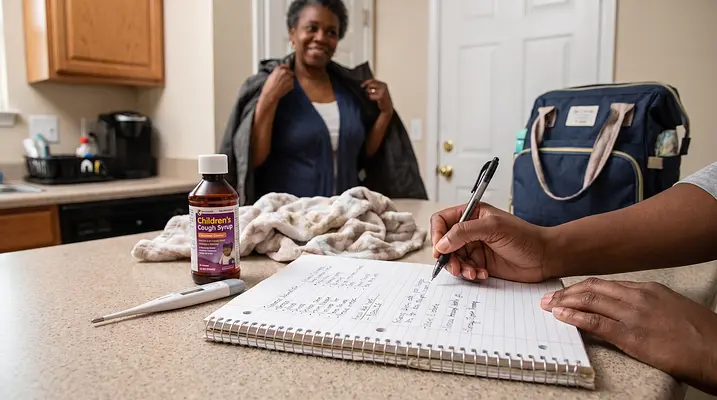
So sooner or later it happens to every family: your child is under the weather, and life still insists on happening. A work meeting that cannot move, an appointment for another child, an errand that will not wait. So a babysitter, grandparent, or kind neighbor steps in, and you spend the whole time away wondering if you remembered to mention everything.
The secret to a calm handoff is not a photographic memory - it is writing things down. A clear, simple care sheet turns "I hope I told them everything" into "it's all right there." It spares your helper from making judgment calls in the dark, spares you from answering texts every ten minutes, and most importantly, it keeps your child's care consistent no matter whose lap they are curled up in.
Here is what to put on paper (or on a shared screen) before you hand over sick duty, and what to ask your helper to jot down while you are away.
📋 Write Down the Care Plan
Your helper cannot follow a plan that lives only in your head. Put the essentials in one place, in plain language, so nothing depends on memory. If your pediatrician gave you any instructions, pass those along exactly as you received them.
- Share whatever instructions your pediatrician gave you, word for word, rather than summarizing from memory.
- Write out the day's rhythm, like nap times, meals, and rest expectations.
- List what your child has been offered to eat and drink today, and how much they actually took.
- Note any upcoming to-dos during your absence, like "offer water often" or "quiet play only."
- Keep it to one page, because a scannable sheet beats a thorough one nobody reads.
🌡️ Summarize the Story So Far
A sitter walking in mid-illness is joining a movie halfway through. A short recap of how the day has gone helps them understand what "normal for today" looks like, so they can notice if something changes.
- Jot down recent temperature readings with the times you took them.
- Describe today's symptoms in plain words, like "runny nose, tired, ate half a banana."
- Note your child's energy and mood so changes stand out, like "clingy but playing quietly."
- Flag anything your pediatrician told you to watch for, in their words.
📞 List Every Number They Might Need
In a wobbly moment, nobody should be hunting through contacts or guessing who to call. Put every relevant number on the sheet, even the ones that feel obvious.
- List your own number first, plus where you will be and when you expect to be back.
- Add a second trusted adult as backup in case you are unreachable.
- Include your pediatrician's name, office number, and after-hours line.
- Write out emergency numbers and your home address, since a flustered helper may blank on both.
- Tell your helper to trust their gut - call you or the pediatrician with any concern, and emergency services for any emergency.
🧸 Share the Comfort Playbook
You know exactly which blanket is The Blanket and that water tastes better in the dinosaur cup. Your sitter does not. Comfort details feel small, but they are often the difference between a peaceful afternoon and an hour of inconsolable tears.
- Name the must-have comfort objects and where they live.
- Describe soothing routines that work, like rocking, a certain song, or books on the couch.
- List favorite sick-day foods and drinks, and any foods to avoid.
- Explain quirks that might otherwise alarm a helper, like "she always cries for two minutes at nap time."
- Mention what does not work, so your helper does not have to learn the hard way.
✏️ Ask Them to Jot Things Down Too
The handoff goes both ways. What happens while you are gone is part of your child's story, and you will want it when you return - and so will your pediatrician if questions come up later.
- Ask your helper to note any temperatures they take, with times.
- Request a quick log of food, drink, naps, and diaper or bathroom trips.
- Have them write down new or changing symptoms and when they noticed.
- Encourage timestamped notes over memory, since "around 2:30" beats "sometime this afternoon."
- Reassure them that short notes are fine - this is a jotted log, not a novel.
🔄 Sync Everyone on One Timeline
Paper works, but it stays behind when you leave and gets messy when multiple helpers rotate through. A shared digital care timeline means you can glance at your phone and see exactly what has happened, and your helper can see exactly what came before their shift.
- Keep one shared record that every caregiver reads and updates.
- Log events as they happen instead of reconstructing them at pickup.
- Review the timeline together at handoff, so questions surface before you walk out the door.
- Carry the same record to pediatrician visits, so nothing gets lost between caregivers.
✅ Quick Action Plan
- Write a one-page care sheet with the day's plan and any pediatrician instructions, shared exactly as given.
- Add a short recap of today's temperatures, symptoms, food, and mood.
- List your number, a backup adult, your pediatrician, emergency numbers, and your home address.
- Note the top three comfort tricks that reliably soothe your child.
- Leave a notepad or shared app open for your helper to log what happens.
- Do a two-minute walkthrough of the sheet together before you leave.
This article is for educational purposes only and is not medical advice. Always consult your pediatrician or a qualified healthcare professional for any questions about your child's health, symptoms, medications, or care, and seek urgent care immediately for any emergency or warning signs.
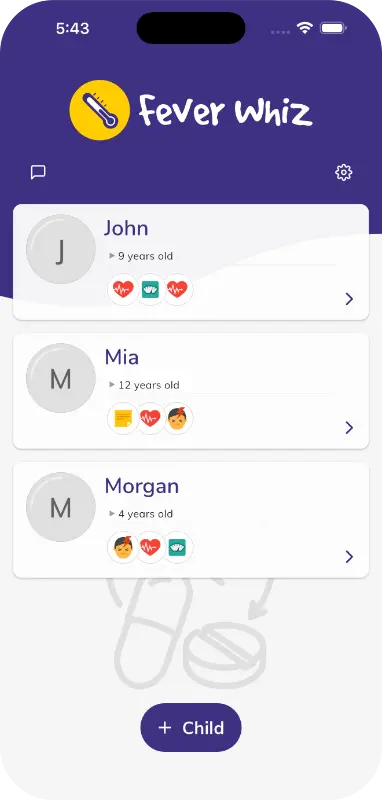
If the paper care sheet feels like one more thing to manage, Fever Whiz can carry the load for you. Parents and caregivers can log temperatures, symptoms, and medications in one place, set reminders, keep care notes, and share a real-time timeline that syncs instantly with sitters, grandparents, and everyone else on the care team. The handoff becomes as simple as "it's all in the app - add what you notice, and I'll see it right away."